
-
 3
minutes
3
minutes
 On this page
- What is your background as a postdoc?

- Why did you join the Prosper cohort?
- How did you find the Prosper cohort?
- Which aspects of Prosper did you find most useful?
- What are your future career plans?
- If there’s one bit of advice you could give to a postdoc that was in the position you were in before you joined Prosper, what would it be?
- Would you recommend Prosper to other postdocs?
Dr Henry Koge
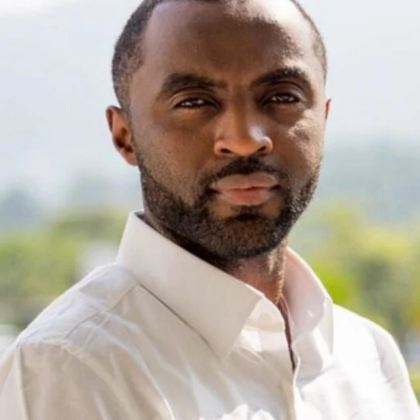
Dr Henry Koge is a educational leadership researcher and entrepreneur. He was a member of the University of Southampton Prosper cohort in 2025.
We interviewed Henry about his career journey and experience with Prosper - read more below.
Role
Teaching Fellow in the School of Education at the University of Southampton.
Case study conducted
March 2026
What is your background as a postdoc?
My doctoral research focused on job satisfaction, motivation, and organisational effectiveness, but my core interest has always been on learning—specifically, how people and organizations learn and how that translates back to performance.
I don't really view myself as a traditional academic; I prefer to think of myself as a curious, lifelong learner. For me, any research or theory must have a practical, real-world application.
Before joining the Prosper cohort, I was working at the School of Education at the University of Southampton. My role was as a Teaching Fellow, which involved a significant teaching load across multiple levels. During my time there, I even redesigned a module on innovations in education to bring in more practical concepts of iteration and improvement.
Beyond my university role, I’ve also been involved in entrepreneurship and quality assurance in education through my work with "Teach Connect", which focuses on raising teaching standards and capacity building for leaders.
Why did you join the Prosper cohort?
I first heard about Prosper when I met Curie Scott, the facilitator of the Southampton Prosper cohort, at an event. What initially drew me in was her confidence and the way she had successfully transitioned between disciplines. She had this incredible ability to take complex ideas and make them understandable, helping you see the real possibilities if you chose to follow a similar path.
At that stage, I was already questioning my future in the institution and looking for someone to validate my thinking.
How did you find the Prosper cohort?
The experience was fantastic and truly eye-opening. It provided a dedicated space to reflect on my career, my past, and my strengths.
It was incredibly helpful in broadening my perspective, allowing me to see that my skill set didn't limit me to the traditional "lecturer to professor" path within academia. It showed me that there was a much wider landscape of possibilities out there.
Which aspects of Prosper did you find most useful?
The sessions focused on practical career tools, like building a CV, were very helpful. I also really valued the smaller, activity-based sessions that pushed us to think differently. These exercises forced us to look at a single problem from multiple perspectives and find new ways to give it meaning.
The community element was another highlight. Academia can often feel very siloed, but Prosper helped bridge those gaps. I was able to connect with people from completely unrelated fields, share ideas, and get feedback that included transferable principles I could apply to my own work. I’m actually still in touch with three people I met during the cohort.
What are your future career plans?
During my time with Prosper, I made the decision to resign from my position at the university. I had become increasingly disappointed by the systemic inequalities and barriers I encountered, and I realized I didn't need institutional approval to make an impact.
Currently, I’m back in Cameroon acting as the CEO for a school complex. My focus is on transforming educational provision by pushing an agenda of project-based learning and STEM, giving students more agency and practical skills.
I’m also working on building my skills in data science, machine learning, AI, and robotics. My goal is to explore how these technologies can be used for social enterprise and innovations in education. While I might return to academia one day, it’s not my priority right now.
If there’s one bit of advice you could give to a postdoc that was in the position you were in before you joined Prosper, what would it be?
Don't just be narrowly focused on the "social-cultural programming" that tells you a degree and a job is the only path. My advice is to use a space like Prosper to find out not just what you are capable of doing, but who you are.
Once you understand your own strengths, likes, and dislikes, you can become "ambidextrous" in how you express your talents and take advantage of the opportunities around you. Find what works for you rather than just following the one path you've been shown.
Would you recommend Prosper to other researchers?
Absolutely. I encouraged my own colleagues to join the program. It’s a space where you can truly discover your potential and you definitely won't regret it.


 Refine