-
 6
minutes
6
minutes


Prosper Institutional case study
Prosper snapshots
There are all sorts of different ways to use Prosper and the Prosper Portal to enhance postdoc career development at your institution.
Since the start of our sector rollout, HEIs have taken a wide range of approaches to embedding Prosper in their provision.
We’ve compiled a select few examples here to demonstrate the variety (and perhaps provide some inspiration).
You can navigate these via the 'On this page' button in the top left.
Many of these examples involve enhanced support from the Prosper team via the Prosper Exchange.
We always want to hear about various ways users are implementing Prosper to explore career development themes, or address challenges.
If you'd like to share a method which has worked for you with the sector OR get some advice from the Prosper team, you can do so through the Prosper Exchange.
You can download a PDF version of this case study by clicking here.
Lancaster University
Lancaster University ran a Careers Day for research-only staff on 19th November 2025 and wanted to embed Prosper. Via the Prosper Exchange, they requested Prosper tailor and deliver two back-to-back sessions focused on resources and skills for those seeking careers beyond academia.
The first was an interactive session looking at tips and best practice for non-academic CVs.
Attendees were asked to send their CVs in advance and bring along printed copies, then split into groups of 4-5 to swap and mutually review/refine. The sessions were delivered by a member of the Prosper team.
The second was a session looking at strategies for career exploration, featuring a panel of former postdocs now employed in a variety of careers beyond academia.
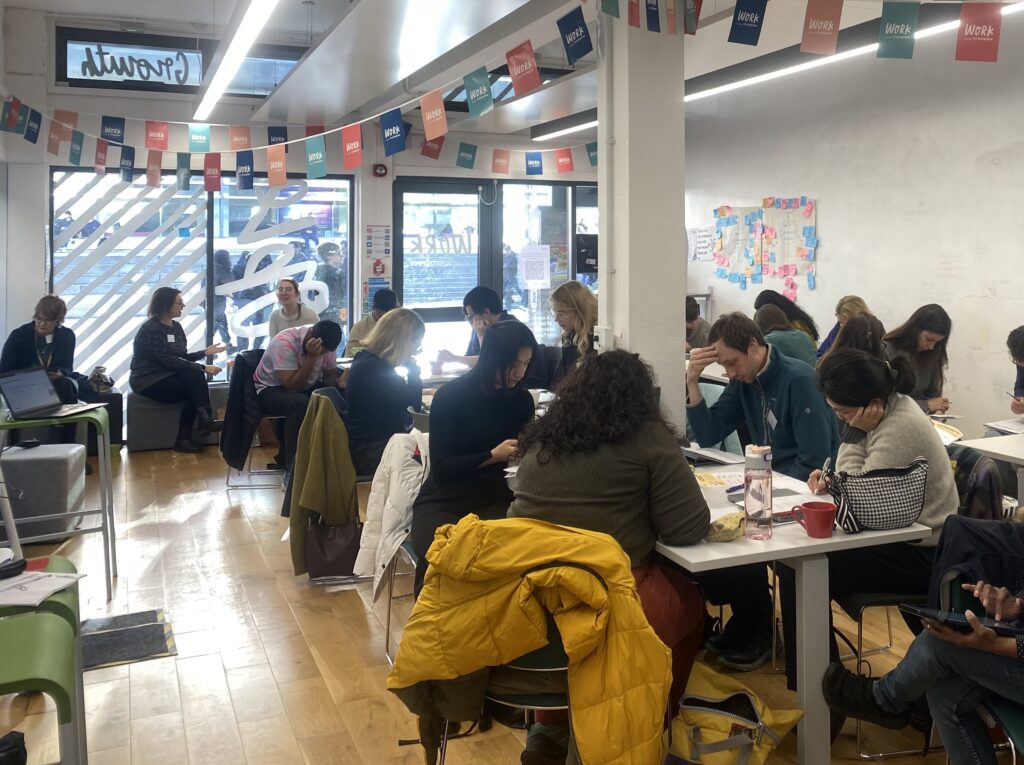
Photo from the Lancaster University Career Day session, delivered by Prosper
University of Manchester

An early adopter of Prosper from day one, the University of Manchester has made continual use of data and reporting from Prosper (via the Prosper Exchange) to inform its implementation.
The institution regularly tracks usage of the Prosper Portal among its research staff to see what resources and pages are most visited and used.
It then uses this intelligence as part of its feedback loop for tweaking the focus of its Prosper programmes (both in regards to its cohorts and beyond).
The data is regularly shared with senior leadership to demonstrate impact.
University of Dundee
The University of Dundee have used Prosper resources to enhance their Researcher Advancement Programme, by working with the Prosper team (through the Prosper Exchange) to map relevant resources to their planned sessions for the academic year.
This was achieved by the Researcher Development team sharing the session plan with the Prosper team at the start of the academic year.
The Prosper team reviewed the themes which the Programme aimed to address and the objectives of each part the Researcher Advancement Programme.
They then identified activities on the Prosper Portal which aligned well with the topics explored.

The team at the University of Dundee will either recommend these resources as follow-on activities to be completed/reviewed post session or refer to them during their session facilitation.
Durham University
To raise awareness of Prosper among Durham postdocs ahead of launching its first cohort, the institution hosted a Prosper showcase day in June 2025.
Attendees heard from a panel of Prosper alumni from other HEIs, learned about the Prosper Portal, and undertook group exercises based on select Portal resources.
The institution worked with the Prosper team (through the Prosper Exchange) to help plan the event – drawing on communications and branding support and having a member of the Prosper team attend to give a talk.
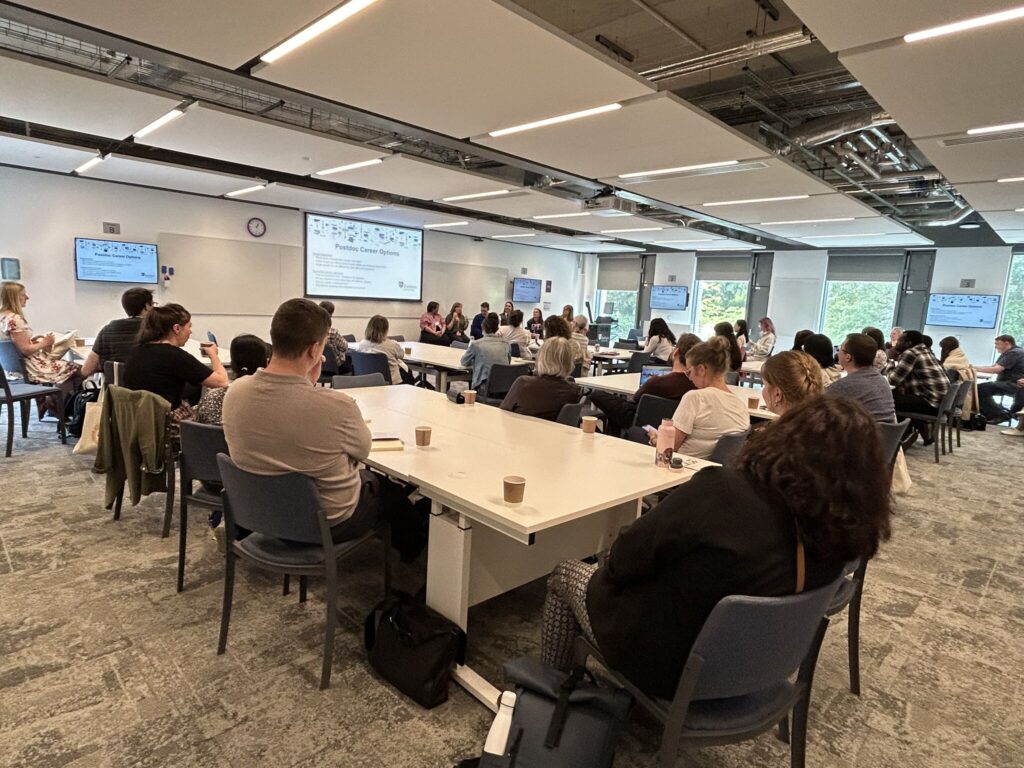
Photo of the Durham University Prosper showcase event
Cardiff University
Cardiff University was part of the REF2029 PCE pilot, for which engagement with Prosper formed part of its reporting.
The institution undertook extensive Mode 1 promotion of the Portal and its resources. It ran blogs for research staff looking at how you can use different areas and functions on the Portal to boost your career development, along with mailers pointing to specific resources, and updates on the Institution’s Viva Engage platform.
It signposted the Portal in various internal newsletters and made use of Prosper’s digital flyers to encourage research staff to sign up to Prosper’s Employer Insight and PI Network sessions.
Queen's University Belfast

Queen’s University Belfast ran a workshop in January 2024 adapted in part from Prosper materials, entitled ‘Career audit – skills for the future’, for postdocs at both Queen’s University Belfast and Ulster University.
It was in-person with a relatively small group (6 people), ran from 9.30 to 3.30, and involved group and interactive exercises whereby participants were encouraged to reflect on their and others’ skills.
The workshop was a great success, prompting lively discussion and high engagement.
The University has since run more Prosper-inspired workshops for both research staff at both HEIs.
Heriot-Watt University
During National Postdoc Appreciation Week, Heriot-Watt University invited the Prosper team (via the Prosper Exchange) to deliver a Portal tour – with a difference.
Heriot-Watt suggested that the session should open across Scotland, and they facilitated promotion to the national researcher development network through the various channels.
The session attracted 54 registrations, with 40 attending from 5 Scottish HEIs (plus two attendees from Italy and Portugal respectively). Of the attendees, 24 were PGRs, 12 were postdocs, and 4 professional services staff and technicians. The session was followed by a 'watch party' at the University of Dundee.
This example shows a collective approach to career development by expanding access beyond a single institution, creating efficiencies for the researcher development team as well as increasing Prosper’s visibility across Scotland.
Shared participation events like this one also serve as a great reminder to postdocs and PGRs that they are part of a wider community, beyond their own institution.


 Refine