
-
 6
minutes
6
minutes
 On this page
- What is your background as a postdoc?

- Why did you join the Prosper cohort?
- How did you find the Prosper cohort?
- Which aspects of Prosper did you find most useful?
- What are your future career plans?
- If there’s one bit of advice you could give to a postdoc that was in the position you were in before you joined Prosper, what would it be?
- Would you recommend Prosper to other postdocs?
Dr Erin McCloskey
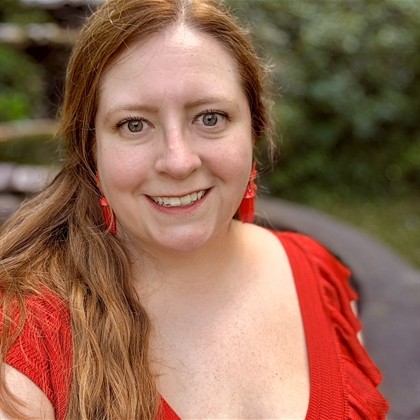
Dr Erin McCloskey is a qualitative health researcher. She was a member of the University of Liverpool Prosper cohort in 2025.
We interviewed Erin about her career journey and experience with Prosper - read more below.
Role
Postdoctoral researcher in the Institute of Population Health at the University of Liverpool.
Case study conducted
February 2026
What is your background as a postdoc?
My academic career is actually my second career. Before moving to the UK, I worked in the States for several years as professional staff within universities, focusing on student support, study abroad, and international recruitment.
I came to the UK in 2015 to study global mental health before securing a PhD scholarship at Canterbury Christ Church University. My doctoral research was quite niche, looking at pregnancy loss and how parents access grief support groups.
After finishing my PhD in 2023, I started a postdoc at the University of Liverpool focused on qualitative clinical trials and monitoring small-for-gestational-growth pregnancies. Currently, I’ve transitioned into a role leading the Public and Patient Involvement (PPIE) strand for the DYNAIRX study within the Civic Health Innovation Lab (CHIL).
It was a significant jump to move from clinical qualitative research into the world of health data, AI, and medication optimisation, but it has really sharpened my skill set in terms of engaging the public with highly technical research.
Why did you join the Prosper cohort?
I joined because I felt incredibly "stuck" and unsure of who I was as a researcher. No one really prepares you for the identity crisis that can hit when you return to work after maternity leave. It felt like a tidal wave; I struggled with focus and prioritisation, all while navigating the exhaustion of new parenthood.
To add to that, my previous postdoc contract was ending, and I was job hunting while very postpartum, which made the question of "what's next?" feel even more burdensome. I applied to Prosper because I needed a protected space during the working day to step back and think about my career in a way that wasn't just another task to do at home while distracted by family priorities.
How did you find the Prosper cohort?
I thought it was a fantastic blend of people from diverse backgrounds. As an immigrant myself, I found it particularly comforting to be in a group with so many different nationalities. It can be hard being the only person in a room worrying about things like visas and sponsorship—which are a massive, often invisible, layer of stress and expense. Being around others who were navigating similar career paths and immigration hurdles made me feel very much at ease.
Which aspects of Prosper did you find most useful?
The small group coaching was a real highlight for me—I felt a great connection with my group. I also found the recruiter session incredibly useful; it completely de-stigmatised the idea of working with recruitment agencies and opened my eyes to more creative ways of finding a job.
There was one particular session led by a woman who was both an immigrant and a mother, and her story really resonated with me. It helped me feel understood in a way that academic training rarely does. Beyond the sessions, the "paper activities" that forced me to look at my core values were vital. In academia, you're trained to be hyper-focused on your specialism, but Prosper gave me the tools to ask myself what actually makes me want to go to work in the morning.
What are your future career plans?
My current contract runs until July 2026, so I have some leeway to think, but my priorities have definitely shifted. While my heart still lies in women's health and mental health, I’ve realised through Prosper that I value security and a positive team environment over following a specific research niche in isolation.
I've decided I don't want to pursue a solo fellowship; instead, I'm looking for roles where I can be a strong team contributor, perhaps within digital health or data science. I'm taking a "softly, softly" approach—what I call "job grazing."
I’m keeping my eyes open, reading job adverts and newsletters without the pressure of needing to apply for everything immediately, just to see what aligns with my values.
If there’s one bit of advice you could give to a postdoc that was in the position you were in before you joined Prosper, what would it be?
Set smaller goals. It’s easy to feel like you have to solve your entire career overnight, but you don't. I’d recommend "job grazing"—just dipping your toe in by reading different job adverts or newsletters.
Even if you don't apply, it helps you understand what's out there. As a parent, you can't save the world every day, but you can save a small part of the day for yourself to take those tiny steps toward your own development.
Would you recommend Prosper to other researchers?
Absolutely. I initially went in thinking it would "solve" my career and hand me a new job, but what it actually did was far more valuable: it made me ask questions about myself that I’d never been prompted to ask during my PhD. It helped me identify that I value stability and teamwork right now. Even if you don't walk out with a brand-new career immediately, the self-awareness and the "gift" of time to reflect are things you just don't get elsewhere in academia.



 Refine